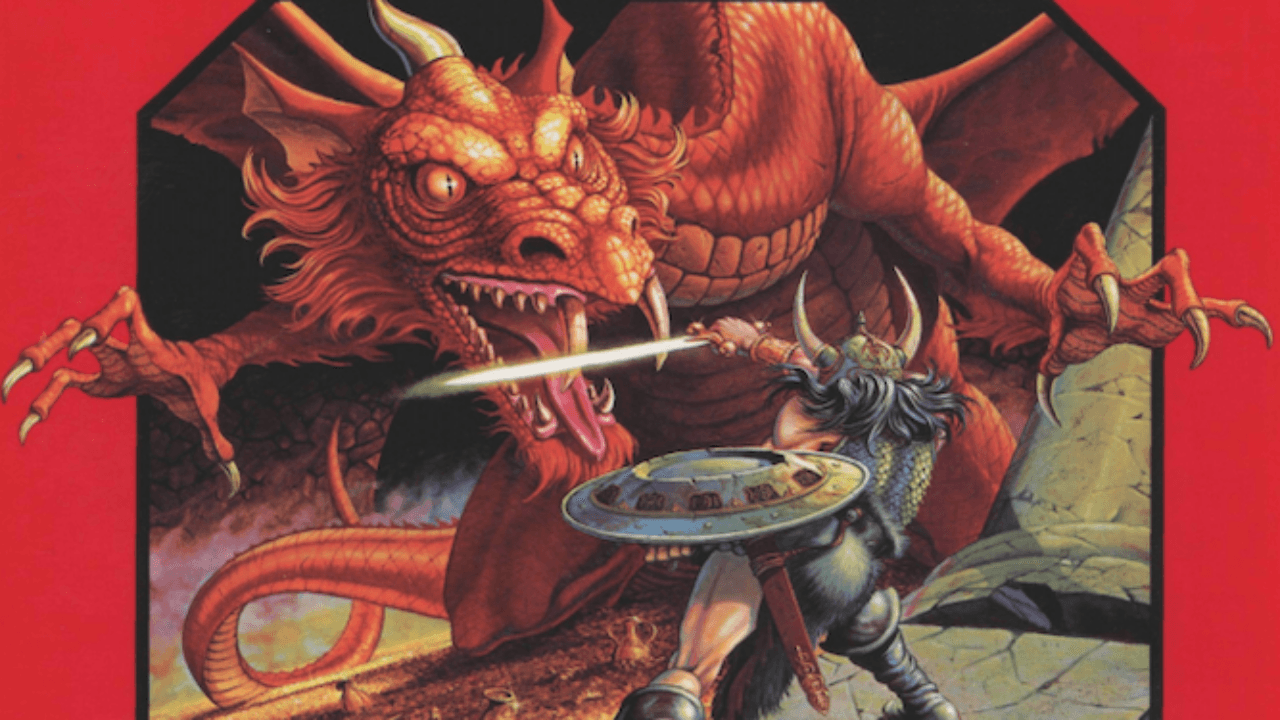
The History of Dungeon's & Dragons
Unleashing the Magic: A Journey Through the History of Dungeons & Dragons

Blog post by Inigo Villalba — Published at 20/06/2023, 18:51:30
Introduction: Dungeons & Dragons (D&D) is a legendary role-playing game that has captivated the imaginations of millions since its inception. Born out of the creative minds of Gary Gygax and Dave Arneson, this iconic tabletop game has left an indelible mark on popular culture, influencing literature, video games, and even movies. Join us on a historical expedition as we delve into the origins, evolution, and enduring legacy of Dungeons & Dragons.
The Birth of a Legend: In the early 1970s, Gary Gygax, an avid tabletop wargamer, and Dave Arneson, a student of Gygax's game club, joined forces to create a new game that would fuse fantasy storytelling with wargaming mechanics. The result was Dungeons & Dragons, which first saw the light of day in 1974. This revolutionary game allowed players to assume the roles of heroic characters, embarking on epic quests and battling formidable foes in a richly imagined fantasy world.
The Classic Editions: The original edition of Dungeons & Dragons, often referred to as "OD&D," laid the foundation for what would become a worldwide phenomenon. It featured three core rulebooks and established the concept of character classes, levels, and a Dungeon Master to guide the narrative. As the game gained popularity, Advanced Dungeons & Dragons (AD&D) was released in 1977, providing more detailed rules and an expanded universe. The success of AD&D spawned numerous supplements and adventures, further fueling the game's growth.
The Renaissance and Diversification: By the 1980s, Dungeons & Dragons had become a cultural phenomenon. It inspired a wave of imitators and spin-offs, solidifying its position as the premier role-playing game. However, controversies surrounding the game, such as the infamous "Satanic Panic," threatened its existence. In response, TSR, the company behind D&D, released the revised second edition in 1989, addressing concerns and expanding the game's lore.
The Third Edition and Beyond: In 2000, Wizards of the Coast acquired TSR and released the third edition of Dungeons & Dragons in 2000. This edition introduced a streamlined rule system, emphasizing customization and accessibility. The open gaming license allowed third-party publishers to create content, fostering a vibrant and diverse D&D community. The fourth edition, released in 2008, faced mixed reactions due to significant changes in gameplay mechanics. However, it paved the way for the immensely popular fifth edition in 2014, which revitalized the game and attracted a new generation of players.
Beyond the Tabletop: Dungeons & Dragons' influence extends beyond the realm of tabletop gaming. The game has left an indelible mark on popular culture, with references appearing in movies, television shows, books, and video games. Its enduring legacy can be witnessed in the virtual realms of MMORPGs, where developers draw inspiration from D&D's immersive storytelling and character progression.
The Power of Imagination: At its core, Dungeons & Dragons remains a celebration of creativity and collaborative storytelling. It transcends the boundaries of age, gender, and background, bringing people together to embark on epic adventures limited only by the bounds of their imagination. With its rich lore, vibrant community, and continuous evolution, Dungeons & Dragons continues to captivate and inspire countless individuals around the globe.
Conclusion: Dungeons & Dragons stands as a testament to the power of imagination and the enduring appeal of immersive storytelling. From its humble beginnings to its current status as a cultural phenomenon, this iconic game has transformed the lives of millions of players. As we gaze into the future, we can only anticipate the further adventures and innovations that await in the ever-expanding